

Discover the role of cable harnesses in medical equipment, improving safety, precision, reliability, and performance in healthcare devices
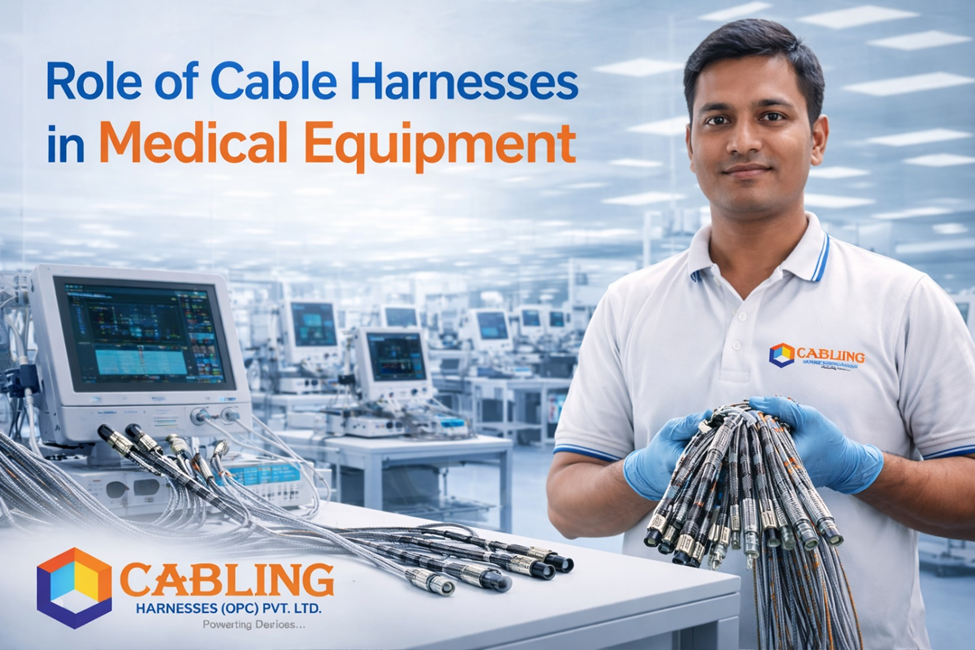
.Role of Cable Harnesses in Medical Equipment
Modern healthcare technology depends heavily on precision, reliability, and uninterrupted performance. From advanced imaging systems to portable patient monitoring devices, every medical device requires a stable, well-organized electrical infrastructure to function accurately. This is where the role of cable harnesses in medical equipment becomes critically important.
Medical devices operate in highly sensitive environments where even a minor electrical failure can affect diagnostics, patient monitoring, or treatment outcomes. High-quality medical wiring harnesses help ensure reliable signal transmission, improved safety, compact integration, and long-term device durability.
As healthcare equipment continues to evolve with automation, AI integration, and miniaturization, demand for advanced medical cable assemblies and customized wiring solutions is growing rapidly across India and global markets.
What is a Medical Cable Harness?
A medical cable harness is an organized assembly of wires, connectors, terminals, sleeves, and protective coverings designed specifically for healthcare and medical equipment applications. These harnesses manage electrical power and data transmission within medical devices while maintaining safety, reliability, and signal integrity.
Unlike standard industrial wiring systems, medical-grade cable harnesses are designed to meet strict regulatory and performance requirements.
Difference Between Standard and Medical-Grade Harnesses
| Feature | Standard Harness | Medical Cable Harness |
| Application | Industrial/general use | Healthcare equipment |
| Precision | Moderate | Extremely high |
| EMI Protection | Basic | Advanced shielding |
| Sterilization Resistance | Limited | High |
| Safety Standards | General standards | Medical-grade compliance |
| Reliability Requirement | Medium | Mission-critical |
Medical equipment often operates continuously in hospitals, laboratories, ICUs, and diagnostic centers. Therefore, precision cable harness solutions must deliver consistent performance without interference or failure.
Importance of Cable Harnesses in Medical Equipment
The role of cable harnesses in medical equipment goes far beyond simply connecting electrical components. These assemblies directly impact operational safety, diagnostic accuracy, and device efficiency.
1. Reliable Signal Transmission
Medical devices require highly accurate data transfer for monitoring and diagnostics. Properly engineered medical electronics wiring harnesses minimize signal loss and interference, ensuring reliable communication between sensors, processors, and displays.
2. Enhanced Safety
Patient safety is one of the most critical aspects of healthcare electronics. Medical wiring harnesses are designed with insulation, shielding, and secure routing to reduce risks such as:
- Electrical leakage
- Short circuits
- Signal disruption
- Overheating
- Electromagnetic interference
3. Compact and Organized Design
Modern medical devices are becoming increasingly compact and portable. Custom cable harness manufacturers create optimized routing systems that reduce clutter and improve internal organization.
This enables:
- Smaller device footprints
- Easier maintenance
- Better airflow
- Reduced installation errors
4. Improved Equipment Reliability
Medical equipment often operates for long periods. Durable healthcare equipment cable harnesses improve reliability by protecting wires from:
- Vibration
- Heat
- Chemical exposure
- Repeated movement
- Moisture
5. Accurate Patient Monitoring
Devices such as ECG monitors, ventilators, infusion pumps, and imaging systems rely on uninterrupted data flow. High-quality diagnostic equipment wiring ensures accurate patient readings and stable machine performance.
Types of Medical Equipment Using Cable Harnesses
Cable harnesses are widely used across multiple healthcare applications.
Diagnostic Machines
Diagnostic systems require precise electrical communication for accurate testing and analysis.
Applications include:
- ECG machines
- EEG systems
- Blood analyzers
- Ultrasound systems
Imaging Systems
MRI, CT scan, and X-ray machines contain complex cable assemblies that support:
- High-speed data transmission
- EMI shielding
- Power distribution
- Sensor connectivity
Ventilators and Respiratory Equipment
Ventilators require dependable wiring systems for:
- Sensor communication
- Alarm systems
- Airflow monitoring
- Real-time control functions
Patient Monitoring Systems
Portable and bedside monitoring devices rely on flexible and durable medical cable assemblies to maintain uninterrupted operation.
Surgical Equipment
Modern surgical systems use precision cable harness solutions for robotic assistance, control systems, and imaging support during operations.
Portable Medical Devices
Wearable and portable healthcare devices require:
- Lightweight harnesses
- Flexible cable routing
- Compact connectors
- Miniaturized assemblies
Laboratory Equipment
Automated laboratory instruments use customized wiring solutions for data collection, temperature monitoring, and process automation.
Key Features of Medical Wiring Harnesses
Medical cable assemblies must meet extremely demanding operational conditions. Below are the essential features that define high-quality healthcare wiring systems.
EMI/RFI Shielding
Electromagnetic interference can disrupt sensitive medical signals. EMI shielded medical cables protect devices from external interference and improve data accuracy.
Biocompatible Materials
Medical harnesses may come into contact with patients or sterile environments. Therefore, manufacturers use safe and compliant insulation materials.
High Flexibility
Portable and movable medical equipment requires flexible cable assemblies that can withstand repeated movement without damage.
Miniaturization
Healthcare devices are becoming smaller and smarter. Miniaturized harnesses support compact device architecture without compromising performance.
Heat Resistance
Medical equipment generates heat during operation. Specialized insulation materials help maintain performance under elevated temperatures.
Sterilization Compatibility
Many healthcare applications require regular sterilization. Medical wiring harnesses must resist:
- Chemicals
- Moisture
- Steam sterilization
- Cleaning agents
Durability and Long Service Life
Medical equipment demands long operational reliability. Precision manufacturing improves durability and reduces maintenance requirements.
Manufacturing Standards & Compliance
Medical cable harness manufacturing requires strict adherence to international quality and safety standards.
Important Standards in Medical Cable Assembly Manufacturing
| Standard | Purpose |
| ISO 9001 | Quality management systems |
| IPC/WHMA-A-620 | Cable and wire harness assembly standards |
| RoHS Compliance | Restriction of hazardous substances |
| UL Standards | Product safety requirements |
| Medical-grade testing | Reliability and electrical safety |
Quality Testing Procedures
Medical wiring harnesses typically undergo:
- Continuity testing
- High-voltage testing
- Pull testing
- Insulation resistance testing
- Signal integrity verification
- Visual inspection
Clean Manufacturing Practices
Medical-grade cable assemblies are often produced in controlled environments to reduce contamination and improve assembly precision.
Challenges in Medical Cable Assembly Manufacturing
The medical sector presents unique manufacturing challenges that require technical expertise and precision engineering.
Precision Requirements
Even small assembly errors can affect equipment functionality. Manufacturers must maintain tight tolerances and strict quality control.
Regulatory Compliance
Medical devices must comply with global regulations and certification requirements, especially for export markets.
Space Constraints
Compact medical devices require complex wiring configurations in limited spaces.
Signal Integrity
Sensitive diagnostic equipment requires stable, interference-free signal transmission.
Long Lifecycle Expectations
Healthcare equipment often remains in service for years. Cable harnesses must maintain consistent performance throughout the product lifecycle.
Why Choose Custom Medical Cable Harness Solutions?
Custom cable harness manufacturing provides significant advantages for medical OEMs and healthcare equipment manufacturers.
Compact Routing
Customized harnesses optimize internal wiring layouts, reducing clutter and improving airflow.
Reduced Installation Errors
Pre-configured cable assemblies simplify installation and reduce human error during assembly.
Better Reliability
Custom-designed medical cable assemblies improve durability and operational consistency.
Faster Manufacturing and Assembly
OEM-specific harnesses reduce assembly time and improve production efficiency.
Application-Specific Solutions
Every medical device has unique electrical and mechanical requirements. Customized wiring solutions improve overall device performance.
Future Trends in Medical Cable Harness Technology
The healthcare industry is rapidly adopting advanced electronic systems, creating new opportunities for innovation in medical wiring harnesses.
Miniaturized Medical Electronics
Smaller wearable and portable devices require compact, lightweight cable assemblies.
Smart Healthcare Devices
IoT-enabled healthcare systems require advanced data transmission capabilities.
High-Speed Data Connectivity
Modern imaging and diagnostic systems demand faster and more stable signal communication.
Advanced EMI Shielding
Increasing electronic complexity is driving demand for improved electromagnetic protection.
Sustainable Manufacturing
Manufacturers are focusing on eco-friendly materials and RoHS-compliant production practices.
Why Choose Cabling Harnesses(OPC) Pvt. Ltd.?
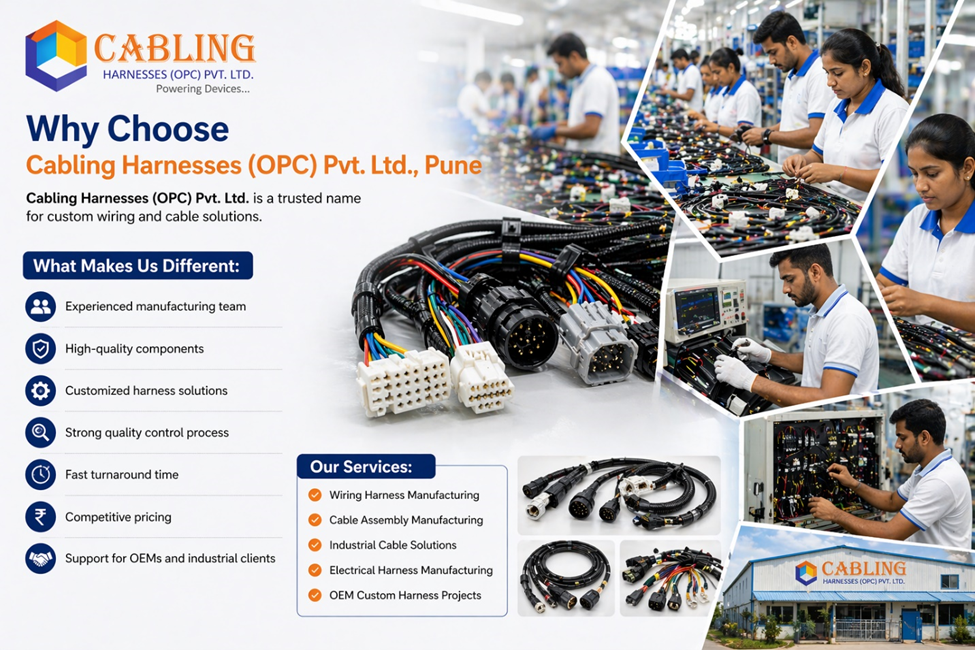
Cabling Harnesses is a trusted custom wiring harness manufacturer serving diverse industries, including medical, automotive, EV, industrial, and power sectors.
Expertise in Custom Wiring Harness Manufacturing
The company specializes in developing customized cable assemblies designed for complex industrial and healthcare applications.
Quality-Focused Production
Every assembly undergoes strict quality checks to ensure reliability, safety, and long-term performance.
Export Capability
With growing international demand, the company supports global customers with export-ready manufacturing standards.
Industry-Specific Solutions
From diagnostic equipment wiring to compact medical electronics wiring harnesses, solutions are tailored to OEM requirements.
Reliable Delivery Support
Efficient production planning and technical expertise help ensure timely project execution and dependable customer support.
Conclusion
The role of cable harnesses in medical equipment is becoming increasingly important as healthcare technology advances toward smarter, faster, and more compact systems. Reliable medical wiring harnesses ensure accurate signal transmission, operational safety, equipment durability, and efficient device integration.
From diagnostic machines and ventilators to wearable healthcare electronics, high-quality medical cable assemblies support the performance and reliability demanded by modern healthcare environments.
As the global healthcare industry continues to expand, the demand for precision cable harness solutions and customized medical device wiring systems will continue to grow.
Looking for reliable medical wiring harness solutions? Contact Cabling Harnesses (OPC) Pvt. Ltd. for customized, high-performance cable assemblies designed for modern healthcare equipment.
📩 Contact Cabling Harnesses Today
📞 +91 73872 84670 / +91 9226275010
✉️ sales@cabling-harnesses.com
🌐 www.cabling-harnesses.com
Frequently Asked Questions (FAQs)
1. What is the role of cable harnesses in medical equipment?
Cable harnesses organize and protect electrical wiring in medical devices while ensuring reliable signal and power transmission for accurate equipment performance.
2. Why are EMI shielded medical cables important?
EMI shielding prevents electromagnetic interference that can disrupt sensitive medical signals and affect diagnostic accuracy.
3. What standards are important for medical cable harness manufacturing?
Key standards include ISO 9001, IPC/WHMA-A-620, RoHS compliance, and medical-grade quality testing requirements.
4. Which medical devices use cable harnesses?
Cable harnesses are used in imaging systems, ventilators, patient monitors, surgical equipment, laboratory instruments, and portable healthcare devices.
5. Why should OEMs choose custom medical cable harness solutions?
Customized harnesses improve reliability, simplify installation, optimize space utilization, and enhance overall equipment performance.
